

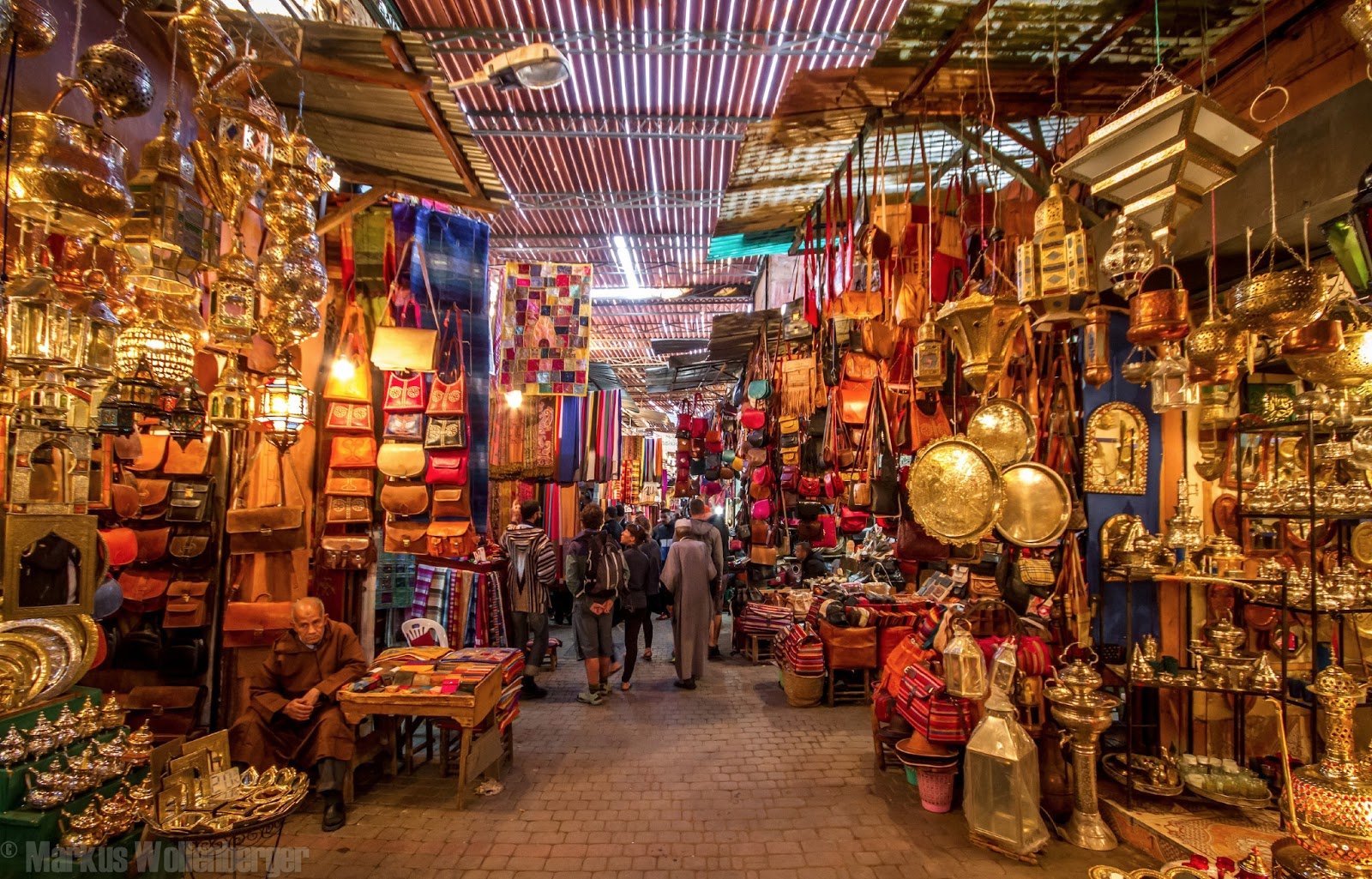
Marrakech beyond the souks reveals a quieter and more authentic side of Morocco’s famous Red City. Marrakech may immediately bring to mind colourful spices, traditional shops, snake charmers and the lively atmosphere of Jemaa el-Fnaa. Although these attractions are essential parts of the city, they are only the beginning of what Marrakech has to offer.
Step away from the busiest tourist streets and you will discover peaceful gardens, magnificent palaces, creative neighbourhoods and intimate riads. These places allow you to experience the history, architecture and everyday culture of Marrakech at a more relaxed pace.
Here are seven magical experiences that will help you explore Marrakech beyond the usual tourist trail.
Marrakech can feel wonderfully energetic, but its historic gardens provide a peaceful escape from the movement and noise of the medina. Behind their walls, you will find fountains, shaded pathways, fragrant plants and beautiful examples of traditional Moroccan design.
Located in the heart of the medina, Le Jardin Secret contains two contrasting green spaces. One is inspired by the traditional Islamic garden, while the other contains plants from different parts of the world.
Its restored pavilions, colourful tiles and carefully designed water system demonstrate the elegance of Moroccan architecture. Climbing the tower also provides an impressive view over the rooftops of Marrakech.
Jardin Majorelle is one of the city’s most famous attractions. Its cobalt-blue buildings, tropical plants and peaceful fountains create a striking combination of colour and nature.
Visit early in the morning and reserve your ticket in advance for a calmer experience. You can also visit the nearby Yves Saint Laurent Museum to learn more about fashion, creativity and the designer’s connection with Morocco.
To experience modern Marrakech beyond the souks, leave the old medina and visit Gueliz. Built outside the historic walls, this neighbourhood presents a completely different side of the city.
Its wide avenues are lined with cafés, restaurants, galleries and independent boutiques. It is an excellent place to see how contemporary Moroccan designers combine traditional craftsmanship with modern ideas.
Art lovers can explore galleries such as Comptoir des Mines and Galerie 127. Visitors searching for original souvenirs can browse concept stores selling clothing, ceramics, jewellery and home decorations created by Moroccan artists.
Bahia Palace is one of the finest examples of Moroccan architecture in Marrakech. Constructed during the late nineteenth century, the palace was designed to display the wealth and influence of its former residents.
Inside, you can walk through elegant courtyards, reception rooms and private apartments decorated with carved cedarwood, painted ceilings, stucco and colourful zellij tiles.
The name Bahia is often translated as “brilliance,” which perfectly reflects the palace’s rich decoration. Arriving early gives you more time to appreciate its architectural details before larger groups enter.
The Ben Youssef Madrasa was once one of North Africa’s most important centres of Islamic learning. Today, it remains an extraordinary historical monument and an essential stop when exploring Marrakech beyond the souks.
Its central courtyard is surrounded by geometric mosaics, carved plaster, Arabic calligraphy and cedarwood decorations. The former student rooms provide an interesting contrast to the richly decorated communal areas.
Take your time to observe the craftsmanship. Many of the smallest architectural details reveal the skill and patience of the artisans who created this remarkable building.
Instead of eating every meal around Jemaa el-Fnaa, reserve a traditional Moroccan dinner or cooking class inside a riad. Riads are historic homes built around peaceful interior courtyards, often decorated with fountains, plants and mosaic tiles.
A riad dinner may include Moroccan salads, couscous, slow-cooked tagine, freshly baked bread and seasonal desserts. Some establishments employ a traditional cook, locally known as a dada, who prepares recipes passed down through generations.
A cooking class offers an even more interactive experience. You may visit a local market, select ingredients and learn how to prepare a traditional meal.
The Mellah, Marrakech’s historic Jewish quarter, reflects an important part of the city’s multicultural past. Its streets and architecture have a different character from other sections of the medina, with balconies that sometimes overlook the narrow lanes.
Visit the Slat Al Azama Synagogue to learn about the Jewish community that lived in Marrakech for generations. Its peaceful courtyard and historical displays provide valuable insight into the city’s diverse heritage.
Nearby, Place des Ferblantiers is known for metal workshops, lantern shops and rooftop cafés. It is also a convenient starting point for visiting Bahia Palace and the Mellah spice market.
Complete your exploration of Marrakech beyond the souks by watching the sunset from a rooftop terrace. As the light changes, the city’s red walls, minarets and distant Atlas Mountains create an unforgettable view.
Choose a terrace away from the busiest parts of Jemaa el-Fnaa and order fresh mint tea or a Moroccan meal. Listening to the evening call to prayer while the sun disappears behind the rooftops is one of the most atmospheric experiences in Marrakech.
Marrakech is a city of many layers. Its famous square and colourful markets offer excitement, but its gardens, palaces, neighbourhoods and riads reveal its deeper character.
Exploring Marrakech beyond the souks gives you the opportunity to slow down, meet local people and appreciate the traditions that continue to shape the Red City. Venture beyond the familiar attractions and you will discover a more peaceful, creative and captivating Marrakech.

Specializing in authentic, tailor-made travel experiences, we design a trip that fits your desires
Copyright © 2005-2025 Majesty Morocco Tours | All Rights Reserved.
WhatsApp us